
Our Services
Lionsgate Learning Centre is a subsidiary of Lionsgate Academy Pty Ltd, a specialised school for kids with ASD and ADHD.

A one-stop safe haven
Lionsgate Learning Centre is a subsidiary of Lionsgate Academy Pty Ltd, a specialised school for kids with ASD and ADHD. Our vision is to bring inclusivity in to education by adjusting curriculum and developing practical teaching methods so that learners can reach their full potential.
Services For Kids With ASD
Our Learning Centre offers a range of services to help kids with ASD.
We are committed to helping kids with ASD reach their full potential.

School Readiness Class
A therapeutic approach that builds on children's own interests to develop relationships and social/communication skills.
Tomatis Therapy
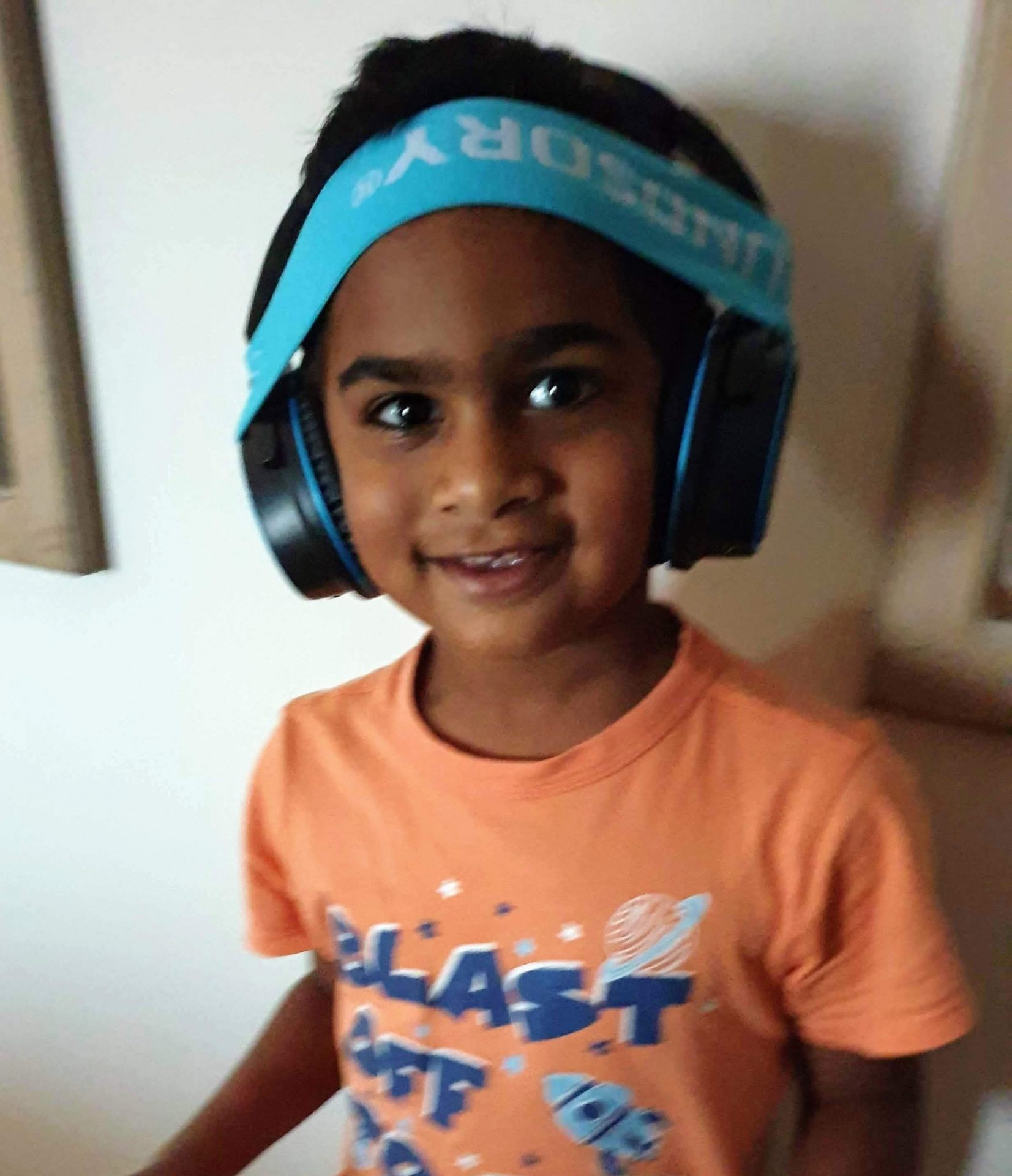
Through the tomatis device, one can listen to various programs where music changes from high to low frequency in real time
Academic Support Sessions
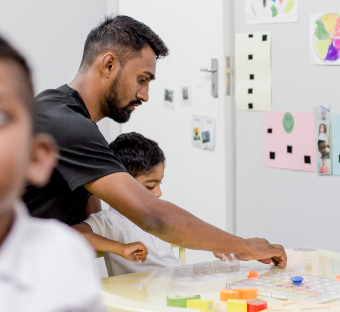
Remediation or remedial teaching consists of tailor-made teaching strategies designed to meet unique learning needs.
Speech & OT
These services form part of a child’s journey with ASD. We have selected the best professionals to work alongside us.
School Readiness Class
This program was created with your ASD child in mind. The primary goal of this program is to facilitate the transition of children with ASD into mainstream schooling. The program aims to equip your children with the social and academic skills that a school environment requires but in a calm and nurturing environment that maximises each child’s inherent learning potential.
Throughout the year we slowly introduce new concepts of independence and structure but our setting is flexible which allows children to work at their own pace and thrive. The program will include a variety of different activities, implementation of visual schedules for routine compliance, social stories, quarterly progress reports, and tracking of IEDP.
Unlike a school, we do not close for extended periods during the year. So kids will get the maximum benefit of a consistent academic routine.
Apply now by clicking the button below, and emailing your forms to info@lionsgateacademy.co.za
Our team! Our team is made up of various expert professionals who are passionate about making a difference in autism. Our teachers are trained and experienced to handle the demands of a spectrum disorder like autism. We take a holistic approach which is why we work with an experienced Occupational and Speech therapist who will play an integral part to ensure that your child academic, social and sensory needs are met.
Children with ASD, ADHD, Speech Delay between the ages of 2 – 6, specifically kids who struggle with sensory regulation, anxiety and are unable to learn in a multi-sensory environment due to sensitivities to noise, high traffic zones and too many social demands. Our teachers are expertly trained and experienced in ASD.
THE LION CLUB GROUP Age group 2 – 4 years |
THE YELLOW GROUP Age group 5 – 6 years |
THE BLUE GROUP Age group 6 – 7 years |
THE RED GROUP Age group 7+ years |
Children are grouped according to their developmental age and academic ability not their chronological age.
Lessons are structured with a curriculum that has been adapted and developed by a qualified teacher, specialised in LSEN (Learners with special educational needs). Teachers search for high-interest, high-energy options to engage the child whilst also providing an academic outline and structure for the year that will help encourage independence. We also work with the child to build social and reciprocal skills (sharing, turn-taking), imaginative skills (pretending to feed a toy animal, cook pretend skills) and even abstract thinking skills. As a child becomes better able to relate to others, additional children may be brought into the group, and more complex social skills are developed.
Throughout the lessons, data is collected and analysed to assess your child’s ability according to the standard IEP’s. Termly reports are given with parent-teacher meetings held at each term.
The school readiness classes start at 08h00, whilst closing times differ from group to group.
The classes are facilitated by trained and qualified teachers having 1 assistant. Physical education and creative arts are part of the curriculum, helping children meet vestibular/proprioceptive stimulation and developing social skills through creative art.
Step 1: Compulsory Assessment
Step 2: Application and Registration Fee
Step 3: Sign contract and pay first month’s fee to secure spot
Step 4: Acceptance – Orientation and integration into the program
Children will be selected on a first come first serve basis after completing a compulsory assessment.
Our classrooms are specially adapted to meet the needs of our kids and the maximum amount of kids per class are 6. Kids will be accepted on a first-come basis. The classroom caters for the various sensory needs of the children by incorporating a sensory corner, a trampoline, etc to ensure that children attending class are meeting that sensory needs. There will be one teacher and one assistant so that children can be easily managed in groups of 3. The table setting will allow for children to be given tasks with oversight and support by teachers or assistant teachers, and during the course of the program, we will introduce the use of the visual schedule.
The normal demands from mainstream schooling can be overwhelming for a child with Autism, especially during this time in their life. We aim to provide the support that they need in order to facilitate the growth of independent learning and social skills to thrive in a mainstream environment.
The environment is created to be a calm and nurturing learning setting that allows children to reach their full potential but without the anxiety and pressure that normal schooling places on children.
ACADEMIC SKILLS:
- Literacy Skills
- Numeracy Skills
LIFE SKILLS:
- Personal Traits
- Social Traits
- Physical Development
- Work Habits
The level of difficulty is dependent on the group. More information is available on request.
The program will include the following weekly activities:
- Art activities
- Musical activities
- Social engagement activities
- Sensory play
- Drama and dance club
- Baking and cooking class
- Lego club
- Ball skills
Tomatis Therapy
Tomatis therapy is neurosensory stimulation. Through the tomatis device, one can listen to various programs where music changes from high to low frequency in real time in order to capture the brains attention and to develop motor, emotional and cognitive skills. Programs can be customised to suit the needs of the person. While listening to music, the headset also delivers a very light vibration at the top of the skull which helps the brain connect the sound and vibration of each frequency: listening through air and bone conduction.
As humans, we always hear and listen through both bone and air conduction when we listen to ourselves, but only through air conduction when listening to others. Optimal listening occurs when these two systems — bone and air conduction — are well balanced.
It varies from person to person. As with any "educational" approach, training must be done in a sustained, repeated way by alternating training with resting phases for proper assimilation. After a complete assessment, your program will be customized and defined by a trained practitioner.
The Tomatis® Method was developed by Dr Alfred Tomatis (1920-2001), an Ear Nose and Throat (ENT) physician. He devoted a considerable part of his career to studying the relationship between the ear and the voice, and by extension, between listening and communication. On the basis of his research, Dr. Tomatis made a distinction between hearing and listening and emphasized the interconnections of the ear, brain, and body. His discoveries were validated at the physiology laboratory of the Sorbonne and were presented to the Academy of Sciences and Academy of Medicine in Paris in 1957 and 1960.
- Developmental disorders – such as ASD & ADHD
- Auditory Processing
- Anxiety Disorders
- Attention, Focus, Memory
- Sensory Integration
- Delays in Reading and Writing
- Down Syndrome
- Learning Disorders: Dyslexia, Dysgraphia, Asperger, Apraxia, etc.
- Obsessive-Compulsive Disorder
- Emotion Regulation
- Stress
- Stressful pregnancies
The reason for such a variety of applications is very simple: the ear is the most powerful sensory integrator of the human body, it is the main gateway to the brain. It is through its action in the sensory message, which our ear perceives; that we manage to stimulate the brain effectively in order to develop its various capacities.
Extensive academic research on the matter validates its beneficial action in each of these fields as diverse as they may be. In order to optimize results, this sensory stimulation is best used as an addition to a therapeutic or educational intervention.
Hearing and listening are not the same. Hearing is a function of the ear. It is the passive reception of sound. Listening, as a function of the brain, is the active participation in what one hears. Someone may have good hearing yet may be a poor listener. Listening is the ability to use one’s hearing voluntarily and attentively for the purpose of learning and communicating.
Listening is therefore a high-level cognitive function that implies the ability to manage emotions. It is more than passive reception of sound that depends on a functioning auditory system. The ear plays a unique and critical role in our day-to-day lives. If sensory information transmitted by the ear is misinterpreted by the brain, listening is disrupted; we have distorted listening. This distortion is related to dysfunction or weakening of the two muscles of the middle ear, their role being to ensure the harmonious transmission of sound to the inner ear and brain. When the sensory message is distorted, the brain protects itself by triggering mechanisms that confuse listening.
Distorted, dysfunctional listening can result from genetics, a difficult pregnancy or birth, early childhood illnesses, multiple ear infections, accidents, living near loud sounds, emotional trauma, and many other experiences that alter how a person processes sounds. Whenever this dysfunction occurs, the brain orders the ear to function less efficiently which then compounds the dysfunction. A variety of problems are associated with dysfunctional listening, such as learning difficulties, lack of comprehension, problems with attention, mistaking certain sounds as aggressive when they are not, to name just a few.
Many clients have provided us with amazing testimonials that we can forward to you upon request.
Some of the feedback include:
- For Kids with ASD, ADHD, after only 1 intensive, parents found a great improvement with concentration and sensory regulation and overall behaviour.
- For kids with ASD, a drastic improvement with speech and communication and body awareness.
- We have had one remarkable case of a child that has many development delays, in respect of speech and gross motor skills. Prior to the first intensive the child could not stand without assistance, and 3 weeks post intensive parents have noted that he has been able to stand on his own and is attempting to walk.
- It requires a consultation with parent and child in order to create a tailor made listening program.
- The sessions can be 40, 60 or 80 minutes depending on the age and circumstances of the individual.
- It is a 14 day program that comprises of one listening session per day. The entire 14 day program is referred to as one intensive.
- You usually see results after one intensive but for the best results three intensives for the year, can be life- changing. It is also best to not wait beyond the recommended waiting period for the second intensive, to capitalize on the stimulation of the brain.
Academic Support Sessions
Remediation, or remedial teaching consists of tailor-made teaching strategies designed to meet the unique learning needs of your child. Remediation is the most powerful teaching method to strengthen areas of learning needs by teaching to your child’s strengths.
Private tutoring is one of the most popular formats for remedial support. We are able to assist your children with after-school tutoring as an option to help ensure their students keep up with their IEDP.
This is service is open and beneficial to all children with special needs, such as general development delay, ASD, ADHD. Our team of therapists, who are also qualified teachers are happy to work in conjunction with the school to ensure that the child meets his or her IEP goals.
The child will require an assessment by our team, and after feedback from teachers, and parents, a plan will be put together to ensure that the child meets his or her IEP goals. A recommended strategic plan will be given to the parent for implementation.
2023 RATES | |
Sessions | Amount |
1 hour | R290-00 |
1.5 hours | R390-00 |
2 hours | R475-00 |
Speech & Occupational Therapy
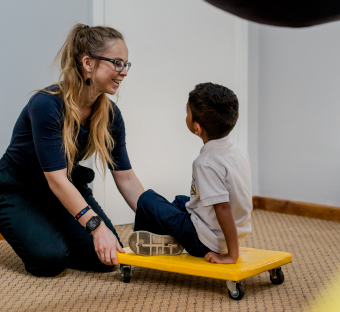
These services form part and parcel of a child’s journey with ASD. For this reason we have hand selected the very best professionals to work alongside us. Some of our packages include their services, however over and above that they charge separately for services rendered. They will however be based at our centre on certain days for additional services required.
Thashni Naidoo
Thashni Naidoo has been working with ASD children for the last 6 years. She is trained in talk tools, PROMPT, Makaton and gestalt processing.
Tamryn Hunter & Team
She has several years of experience and is also trained in sensory integration therapy. She is well known in this part of the community as being an advocate for autism. She works closely with our Speech Therapist and is therefore able to provide a holistic service.
Tamryn and Janet are based at our centre.